Prologue
At the foot of Arashiyama
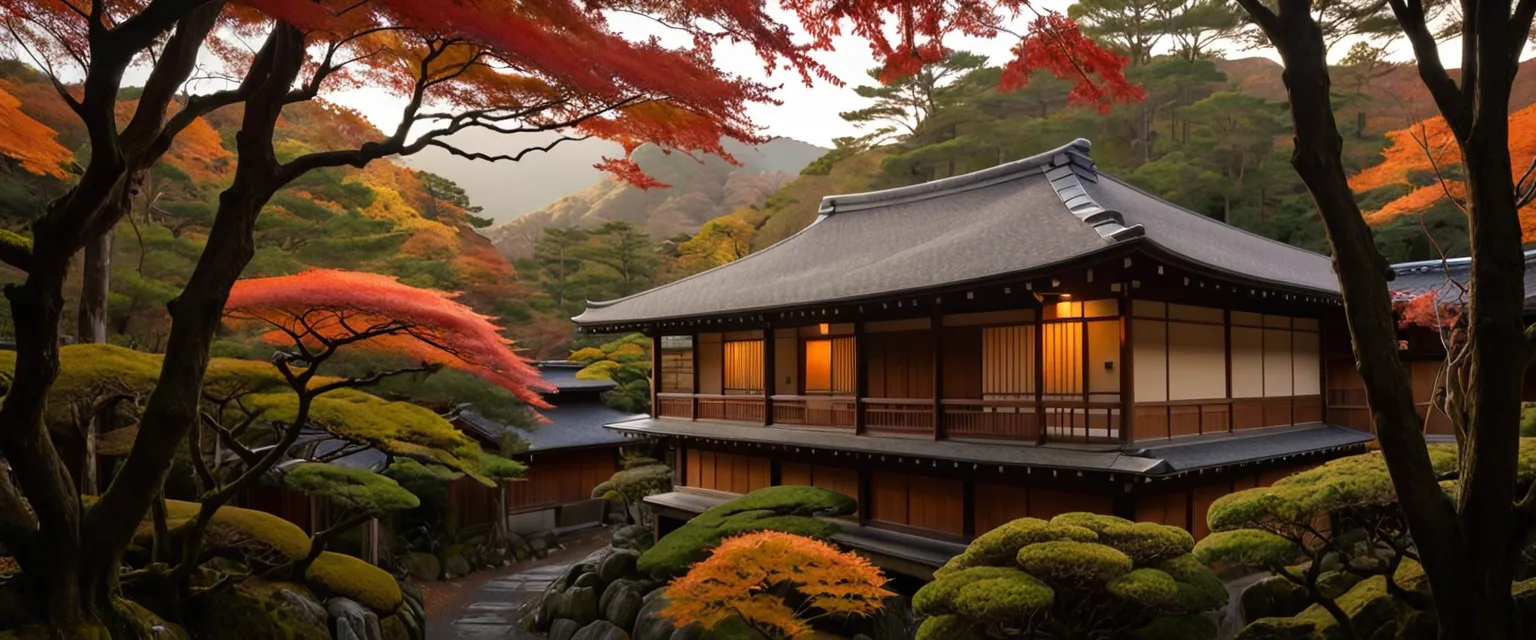
Tucked into the hills of Arashiyama and Saga, with only a curtain at the entrance and no signboard, Momijiyado stands quietly out of view.
What follows is a small tour — the setting, the bath, the meals, the engawa, the courtyard, and the four seasons — one by one.
Momijiyado / engawa, autumn morning
I. — Setting
In Arashiyama
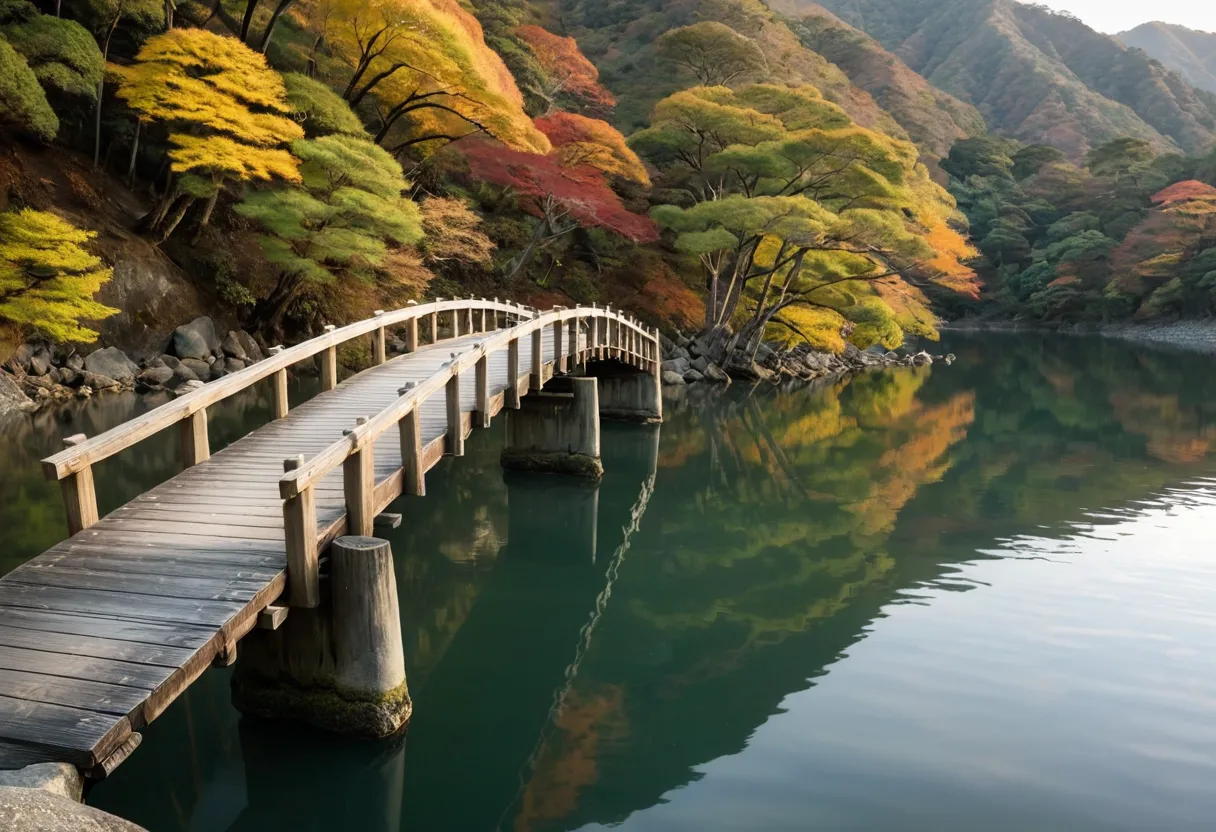
To the west of the old capital, between Arashiyama and Saga, you would cross the Togetsukyo bridge, slip through a path of bamboo, and climb a narrow lane into Oku-Saga. There, at the side of the road into the hills, a small noren marks the entrance.
No signboard. No address. Because Momijiyado stands somewhere between the real and the imagined.
Togetsukyo, Arashiyama
II. — Onsen
The evening bath
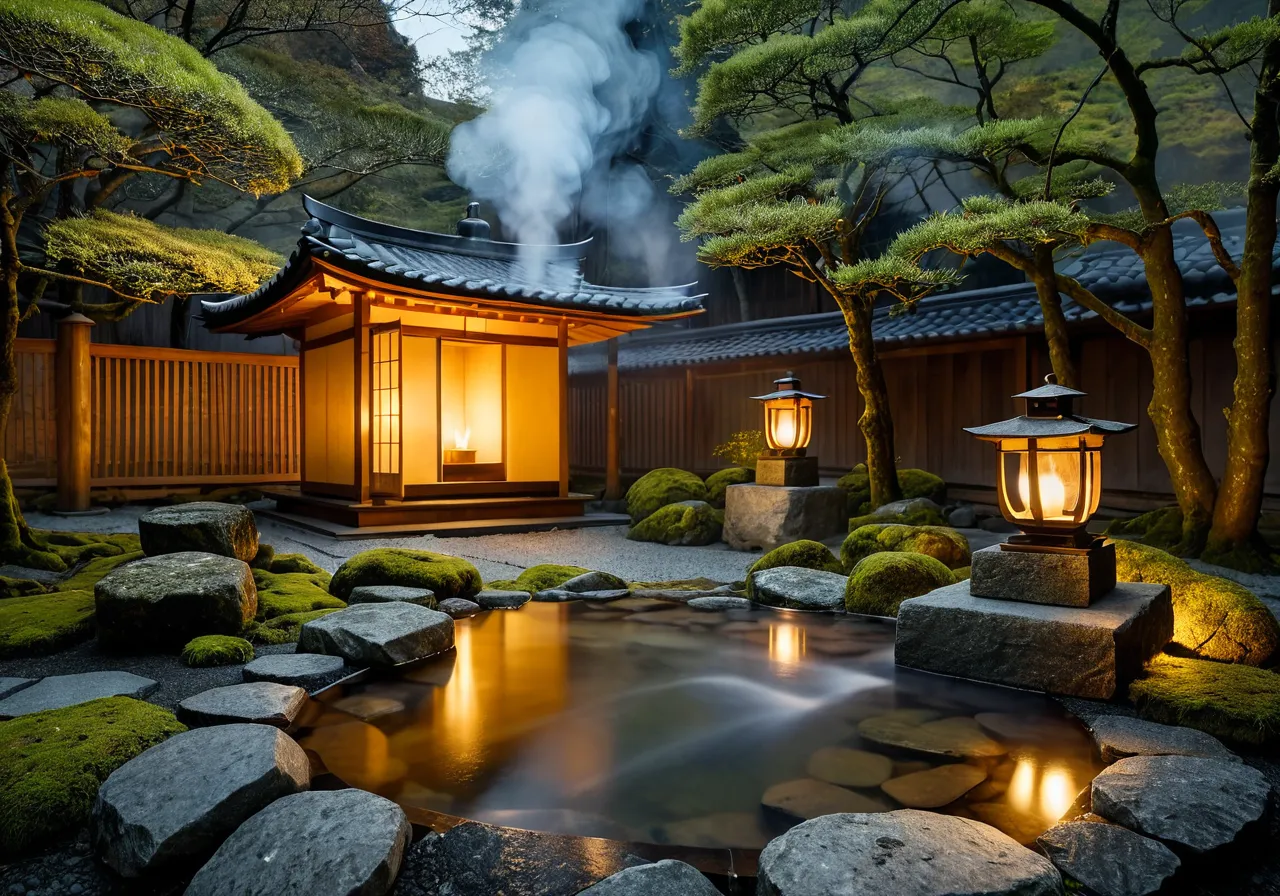
The hot spring is drawn into a single basin from the hills of Oku-Saga. Lit softly by the stone lanterns, the steam rises slowly into the cool air.
As the sky turns to deep blue, the shadow of the mountain falls quietly across the surface of the water. Simply sinking into the bath — the weariness of a day's travel undoes itself, without your noticing.
Outdoor bath / stone lantern and steam
III. — Cuisine
A seasonal kaiseki tray
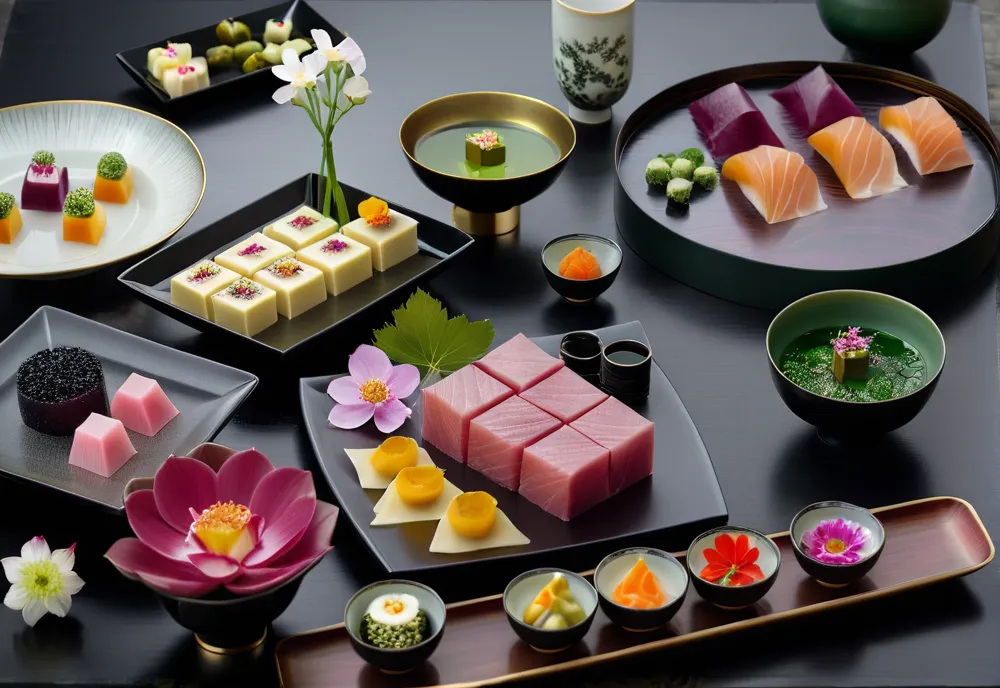
Head chef Kazama Akira listens to the morning market and the messages of the mountain, and composes the day's menu accordingly. Built on the Kyoto kaiseki tradition, each plate brings the four seasons of Arashiyama directly to the table.
Sashimi, soup, grilled, simmered, fried, rice, pickles, fresh fruit — not a meal that competes in number, but one in which each seasonal dish is meant to be tasted quietly, one at a time.
Kaiseki / changes with the season
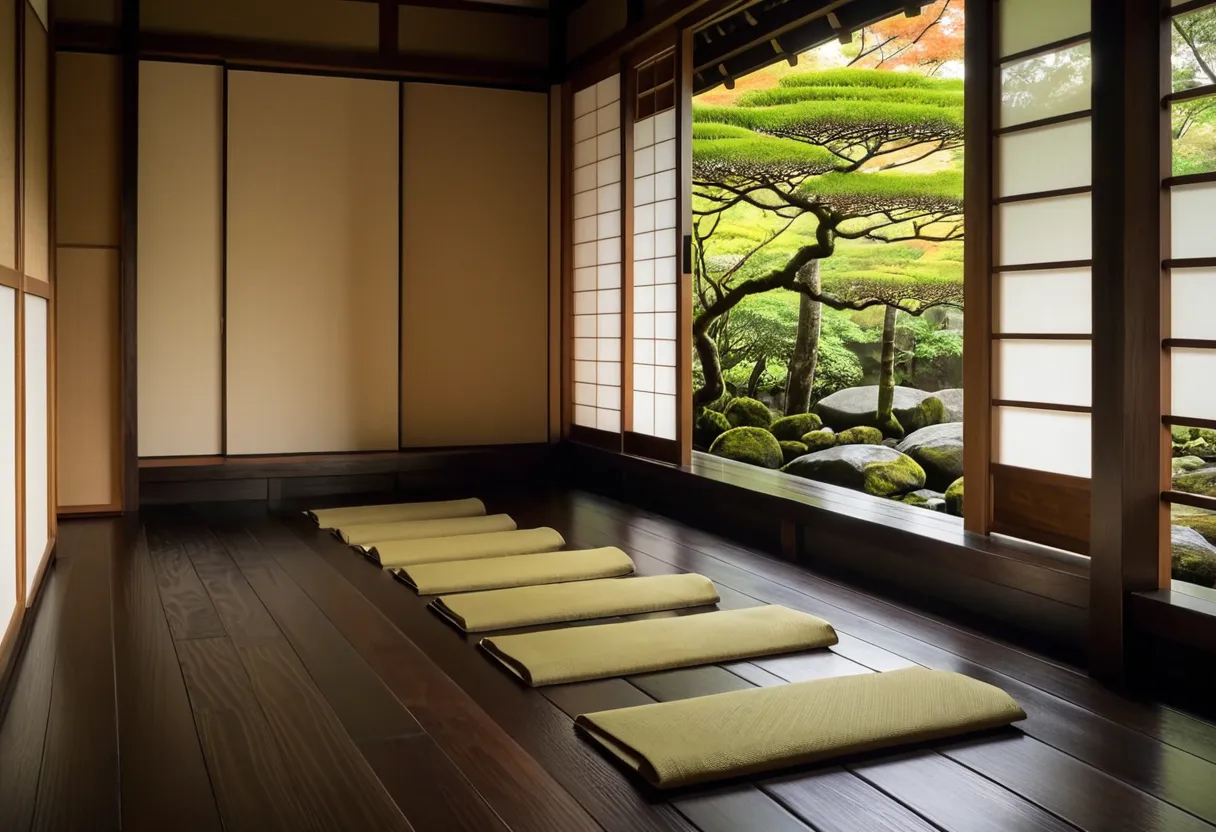
IV. — Engawa
The engawa
The long south-facing engawa is the spine of the inn. Morning mist, midday light, the cry of the evening cicada, the cool shadow of the mountain at night — each enters the tatami room without ever opening the door.
A place where, without your moving, the season walks in to greet you.
The engawa / autumn morning
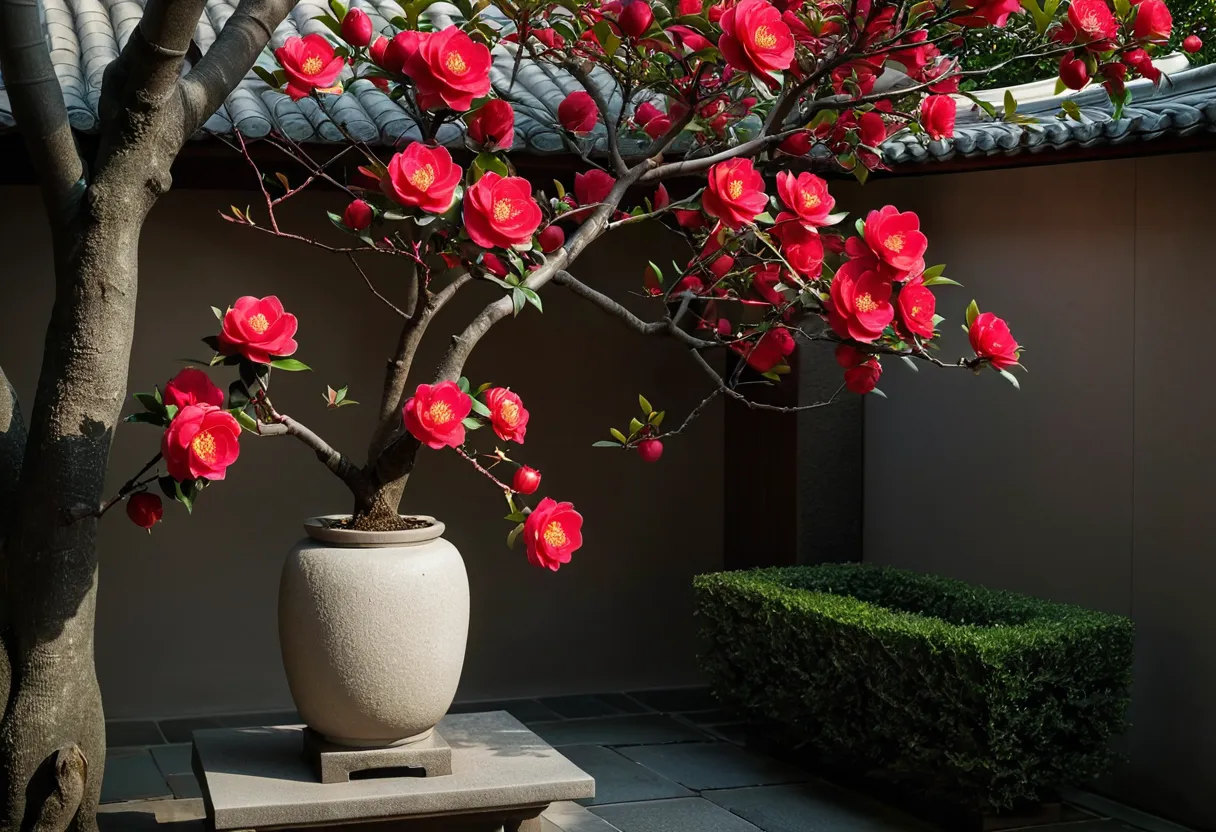
V. — Courtyard
The camellia in the courtyard
A single camellia tree stands in the courtyard, planted by Tsubaki, the previous proprietress. From early spring it begins to bear pale pink flowers, and continues to bloom, season after season, until the end of winter.
Below it: moss and stone, a single closed umbrella, one stone lantern. With only this much, the four seasons turn here in full.
Courtyard / camellia and stone lantern
VI. — Four Seasons
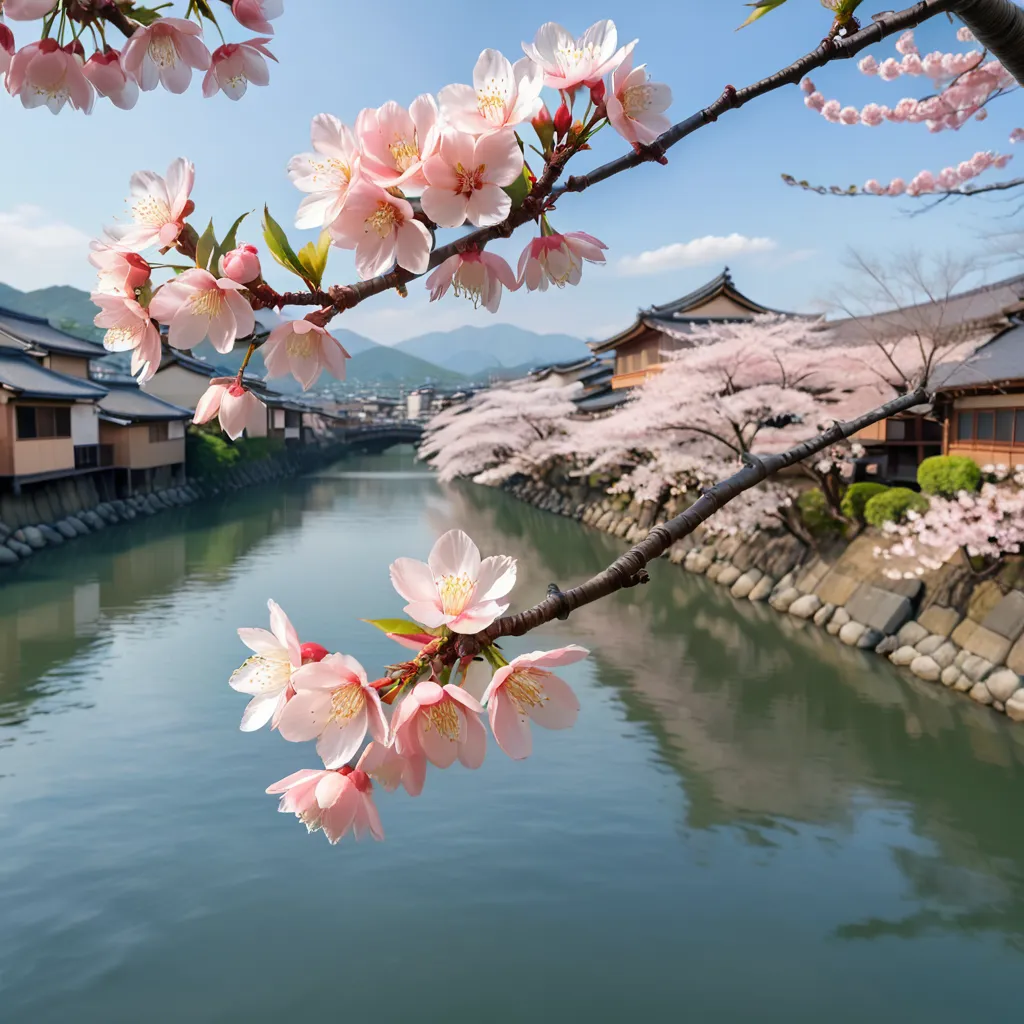
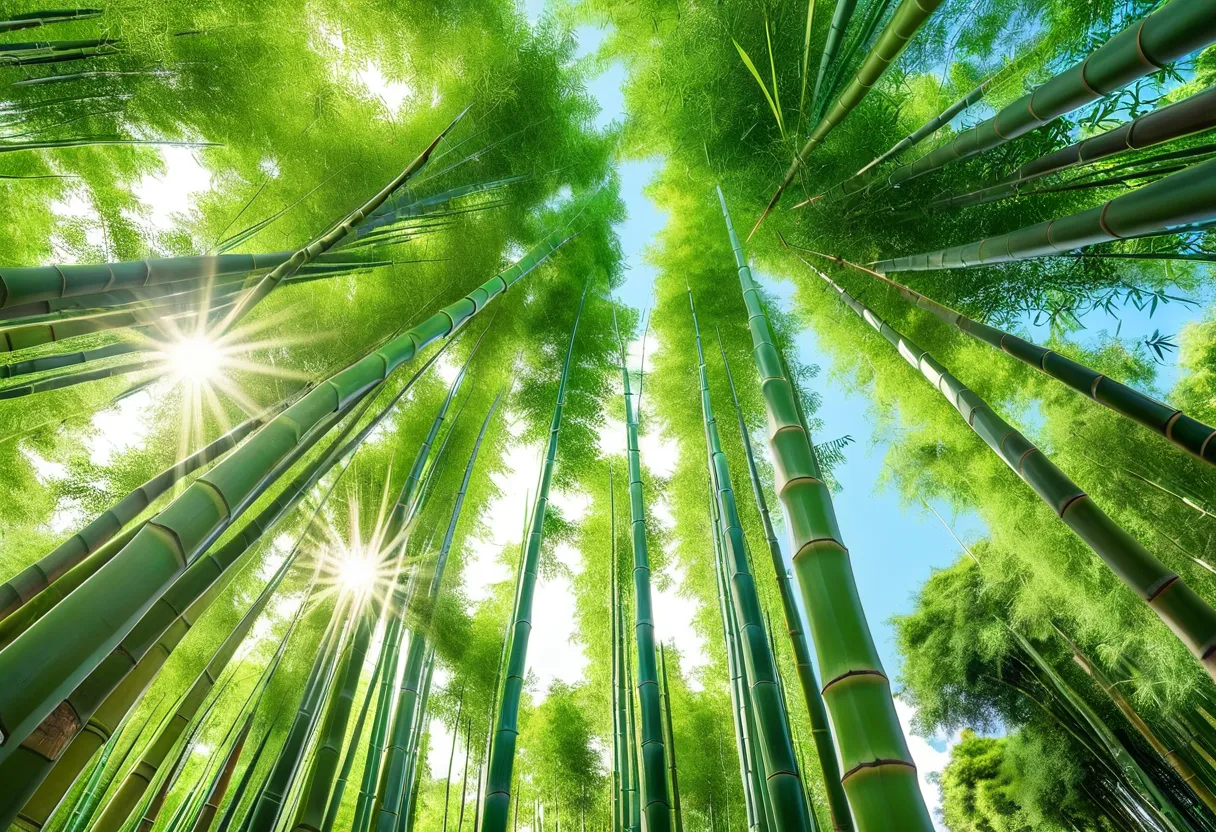
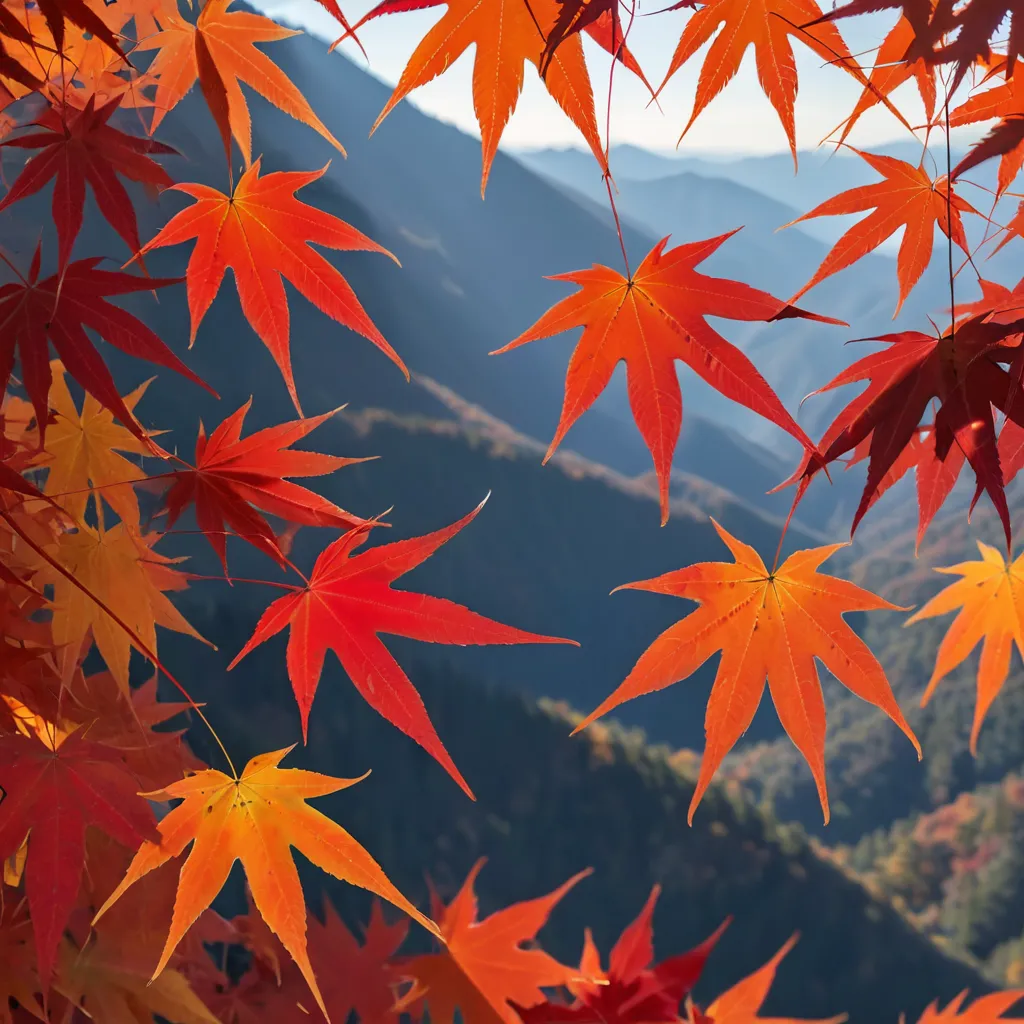
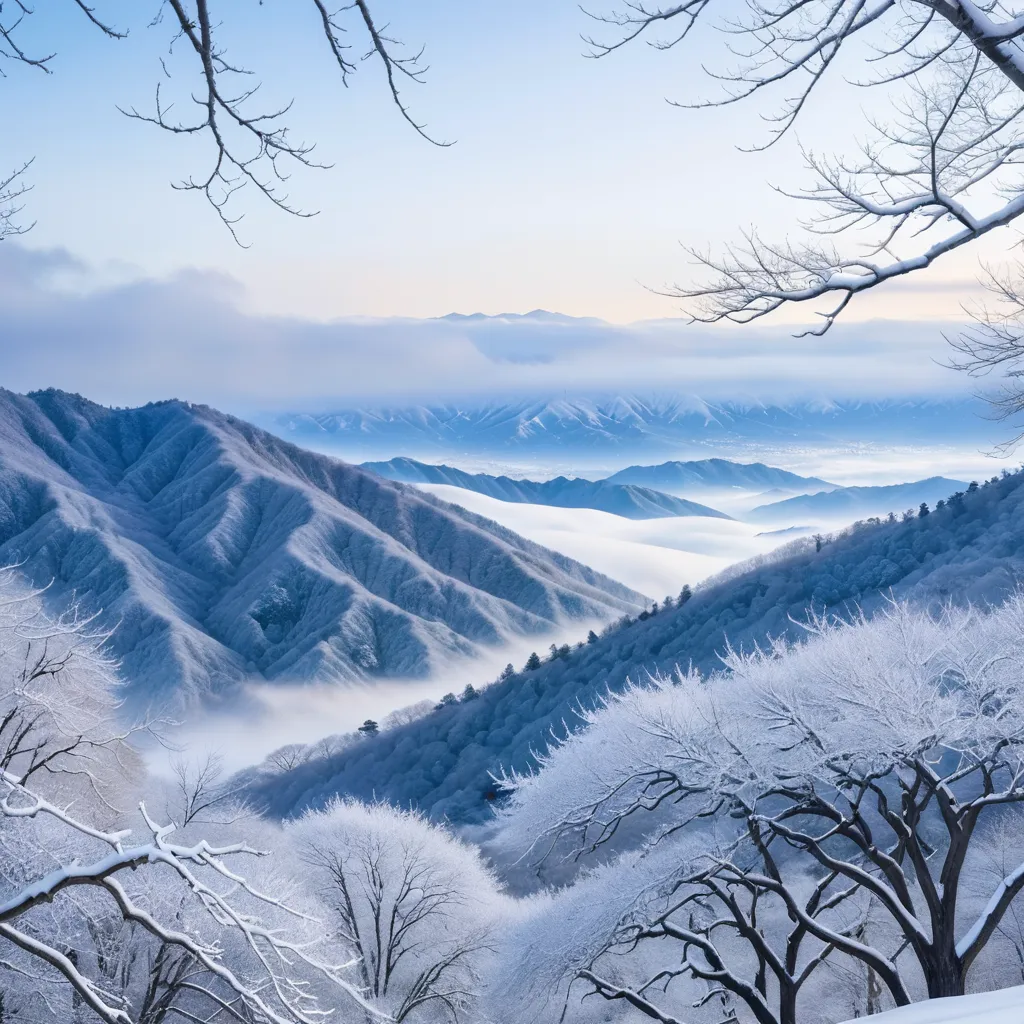
Spring · Summer · Autumn · Winter
The seasons of Momijiyado